Windows wear out over time. In Florida, sun, salt air and storms speed that up. When a window starts to give you trouble, you may wonder if you should repair or replace windows. The right choice depends on what is wrong, how old the window is and what you want for your home. This guide walks you through it.
Key Takeaways
- Some problems are small and easy to fix.
- Fog between panes means the seal has failed.
- Most older windows were not made to resist storm debris.
- Florida law requires insurers to offer credits for wind mitigation features.
When Repair Makes Sense
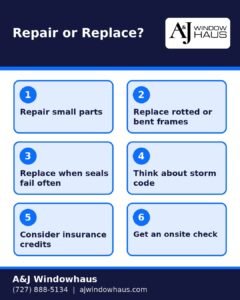
Some problems are small and easy to fix. Repair may be a good choice when:
- A latch or lock is broken
- A screen is torn
- A balance or roller is worn
- Weatherstripping is loose
- Caulk around the frame has cracked
If the frame is sound and the glass is fine, a repair can add years of use.
When Replacement Makes Sense
Other problems point to replacement. Think about new windows when:
- The frame is rotted, bent or corroded
- Water leaks in during rain
- The glass fogs between panes
- The window is hard to open or will not stay shut
- You feel drafts or see high cooling bills
- You want storm protection without shutters

Upgrade Your Windows With Confidence
What About Foggy Glass?
Fog between panes means the seal has failed. Moist air has gotten inside. Sometimes only the glass unit can be swapped. But if many windows are fogging, the whole set may be near the end of its life.
Think About Florida Storms
Most older windows were not made to resist storm debris. If you live in a wind-borne debris region, protected openings are often required. When you replace windows, the new ones usually must meet current code. Impact windows can meet that need without shutters. Read more about Florida hurricane window codes by county.
Think About Insurance
Florida law requires insurers to offer credits for wind mitigation features. Opening protection is one. Repairing an old window will not change your rating. Replacing it with a rated impact unit might. Ask your agent before you decide.
Think About Comfort
New windows can also make your home more comfortable. Laminated impact glass can cut outside noise from traffic and neighbors, and low-E coatings can reduce the heat that comes in from the sun. Better seals can cut drafts and help your air conditioner work less hard. These gains do not come from a simple repair.
| Problem | Repair or replace? |
|---|---|
| Broken latch or lock | Often repair |
| Torn screen | Repair |
| Cracked caulk | Repair |
| Foggy glass in one window | May repair the glass |
| Rotted or bent frame | Replace |
| Leaks during rain | Often replace |
| No storm protection | Replace with impact units |
How Old Is Too Old?
There is no single age at which every window must be replaced, because the right answer depends on the frame material, the quality of the original install and the conditions around your home. Windows that face the water or the afternoon sun often wear out sooner than those on a shaded side of the house. Aluminum frames near salt air can corrode, while older wood frames can rot when caulk fails and water gets inside. If your windows came with the house and you are not sure of their age, look for labels or stamps between the glass panes or on the frame. A window pro can also tell a lot from the hardware and frame design. When several windows show wear at the same time, replacing them as a group is often more practical than fixing them one by one, since you avoid paying for repeat visits and you can protect more openings at once.
Upgrade Your Windows With Confidence
The Cost of Waiting
Small problems tend to grow. A minor leak can soak the wall below a sill and lead to mold or rot that takes more work to fix later. Planning ahead also lets you schedule work outside of the peak storm months.
Should You Do Them All at Once?
Some owners replace every window at once, while others choose to do the work in phases over a year or two. Doing all openings at once can help with your opening protection rating, while phases can spread out the work and the cost. Talk with your installer about the best plan for your home.
A Quick Self-Check
Walk around your home and open and close each window to see how smoothly it moves. Look closely for rot, rust or fog trapped between the panes of glass. Check the walls below each sill for water stains, and feel around the frames for drafts on a windy day. Write down what you find, take photos of any problems and note which rooms bother you most. Bring this list to your consultation so the installer can focus on the windows that matter most to you.
Questions to Ask a Window Pro
- Can this window be repaired, or is the frame failing?
- Is my home in a wind-borne debris region?
- Would impact windows help my insurance?
- What styles fit each room?
- Do you pull the permit?
Common Mistakes to Avoid
- Patching a leak that keeps coming back
- Ignoring rot around the frame
- Replacing without a permit
- Choosing a style that does not fit the room
- Forgetting about doors and sliders
Upgrade Your Windows With Confidence
Make the Right Call for Your Home
Deciding whether to repair or replace windows is easier with a clear look at each one. A&J Windowhaus is a family-owned window and door company based in St. Petersburg. We offer six window styles, including tilt-and-turn and casement. Explore our window types. Ready to talk about your home? Call A&J Windowhaus at (727) 888-5134 or contact us online to book an onsite consultation.
Frequently Asked Questions
Q: How do I know if I should repair or replace windows?
A: Small parts can often be repaired. Rotted frames, leaks and failed seals often mean replacement.
Q: Can foggy windows be fixed?
A: Sometimes the glass unit can be replaced. Many foggy windows can signal wider wear.
Q: Do new windows need to meet code?
A: Usually, yes. Replacements in Florida generally need a permit.
Q: Will impact windows lower my insurance?
A: They may help with wind mitigation credits. Ask your agent.
Q: Should I replace all my windows at once?
A: It depends on your goals. Doing all openings can help your opening protection rating.